


Let's Discuss Animal Welfare Reform: What Does it Mean for Vincennes
- Aug 10, 2025
- 6 min read
Updated: Aug 11, 2025
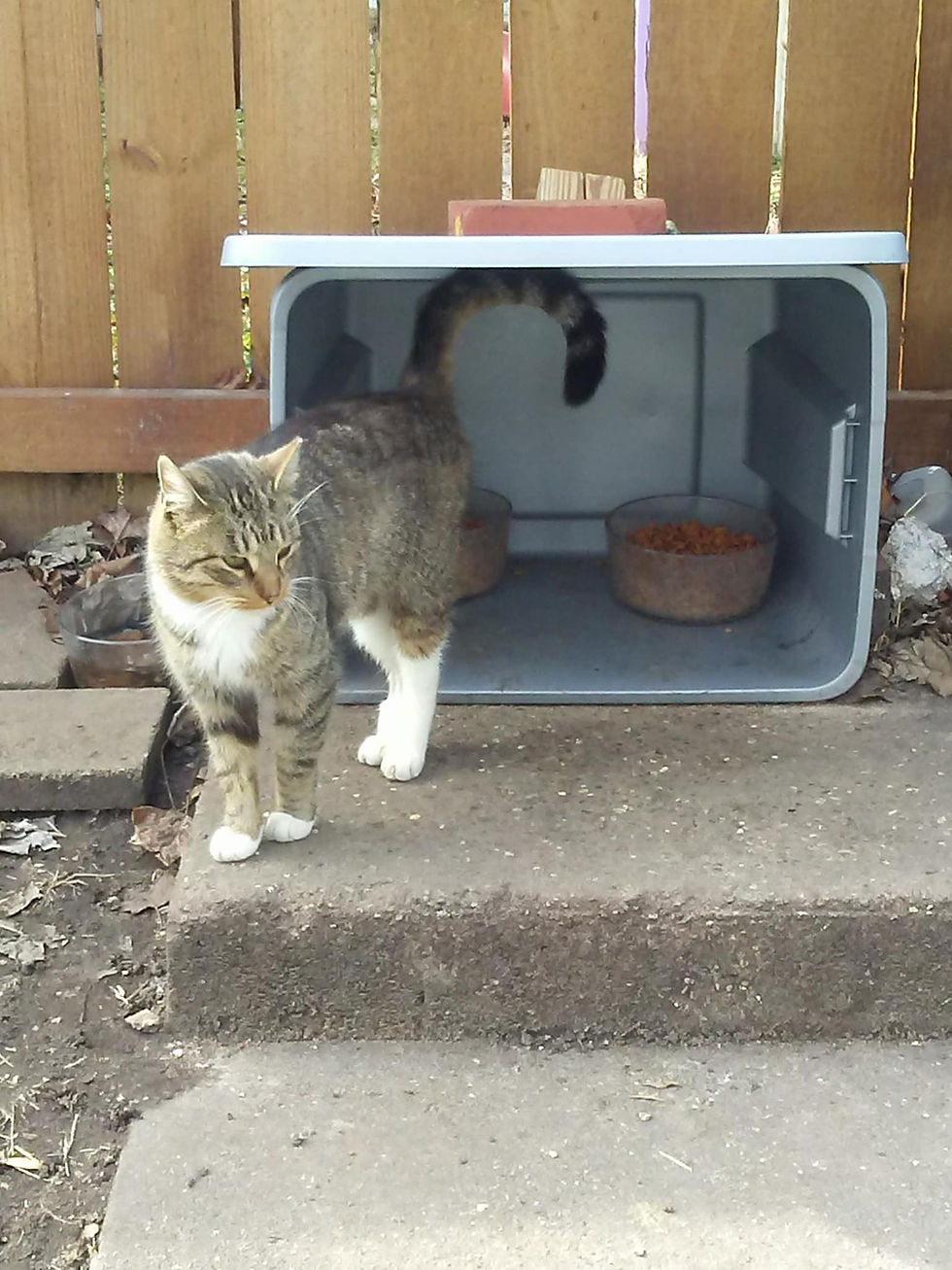
Animal Welfare Reform refers to the efforts to improve the lives of animals by addressing their physical and mental well-being. Providing better living conditions, humane handling, and responsible care.
The key take away:
Improving Living conditions:
includes providing adequate space, shelter, food, and water. Reducing over crowding and promoting opportunities for animals to express natural behavior.
Extend Humane Handling and Treatment:
Efforts focus on minimizing pain, fear, and distress during handling and transportation.
Good animal welfare requires disease prevention and treatment, responsible care, proper housing, management, nutrition, humane handling, and when necessary humane euthanasia.
Now, let's discuss the issues we have locally with Animal Welfare:
Issues locally included, but not limited
Abandoned pets
Cruelty to Animals
Feral cat
Overpopulation in companion animals
Taking a glance at each one:
Abandoned pets :
Are companion animals that are either inadvertently or deliberately abandoned by their owners, by either dumping on the streets, leaving them alone in vacant property, or relinquishing them to a shelter or rescue.
Cruelty to Animals:
Known as animal abuse, neglect, or cruelty; is the infliction of suffering, harm by human; either by omission (neglect) or by commission. Narrowly, can be causing harm for specific achievements; there are several conceptual approaches to animal cruelty. Animal exploitation involves physical not only directly and indirectly.
Let's take a dive into Indianas Animal Cruelty Law. IC 35-46-3-12
12-A
This section does not apply to a person who euthanizes an injured, sick, homeless, or an unwanted animal if :
The person is employed by a humane society, an animal control agency, or a governmental entity operating an animal shelter or other animal impounding facility; and
The person euthanizes the domestic animal in accordance with guidelines adopted by the humane society, animal control agency, or governmental entity operating the animal shelter or other animal impounding facility.
B) A person who knowingly or intentionally abused a vertebrate animal commits cruelty to an animal. Class A misdemeanor - However, the offense is a level 6 felony: IF
1.) person has a previous unrelated conviction under this section; or
2.) The person committed with the intent to threaten, intimidate, coerce, harass, or terrorize a family or household member.
C.) A person who knowingly or intentionally tortures or mutilates a vertebrate animal commits torturing or mutilating a vertebrate animal: a level 6 felony
D.) As used in this subsection "domestic animal" means an animal that is not wild:
1) the term is limited to cattle, calves, horses, mules, swine, sheep, goats, dogs, cats, poultry, ostrich, rhea, and emus
A person who knowingly or intentionally kills a "domestic animal" without the consent of the owner of the "domestic animal" ; commits killing an animal, a level 6 felony
E.) it is a defense to a prosecution under this section the accused person:
1. Reasonably believes the conduct was necessary to:
A.) prevent injury to the accused person or another person:
B) protection of property of the accused person from destruction or substantial damage; or
C.) prevent a seriously injured vertebrate animal from prolonged suffering; or
2. Engaged in a reasonable and recognized act of training, handling, or disciplining the vertebrate animal.
Feral/Stray Cats:
They are unowned and live outdoors and avoid human contact; does not allow itself to be handled or touched.
If not spayed or neutered community cats may breed over dozens of generations.
Some may become more comfortable with people who regularly feed them. There are an estimated 480 million stray or feral cats in the world.
Overpopulation
In the United States estimated six to eight million animals are brought to shelters or rescue a year. Approximately three to four million are subsequently euthanizes; including 2.7 million considered adoptable.
In Indiana, Animal Welfare Reform is a multi facetted issue with ongoing legislative efforts, advocacy from various organizations, and varying opinions on the effectiveness of existing laws and recent changes.
Locally, animal welfare reform is slow and missing needed changes:
Expanding Foster to Adoption program
Improvements in Vaccine protocol
Behavioral Enrichment
Revisions in holding times
Barn Cat program
Expand registration and micro chipping
Expansion of TNVR program
Snip tip and chip
A.) Foster to Adoption program
Allow potential adopters to care for a cat or dog in their home temporarily, with the option to officially adopt them, if they decide it's a good fit.
These programs offer a chance for both the animal foster and foster family to assess compatibility.
Here is how it works:
Temporarily placed
Trial period
Returned or rehoming
For the Pets:
A.) Reduction in stress by allowing a smooth transition from a shelter or rescue environment to a home environment.
B.) Provides a chance to decompress and adjust to a new environment.
C.) Gives a chance to showcase their personality.
For the shelter or rescue
A. Reducing the number of animals
B. Allowing for better assessment
C. Providing a better suitability
What is the 3-3-3 Rule for cats?
A set of guidelines to help understand a newly adopted cat's adjustment period. A roadmap for the first three days, three weeks, and three months after the adoption. These emphasize patience, consistency, and positive reinforcement to help acclimate to their new environment.
3 Days to Decompress
Big Change
A. Trying to figure out their new environment/routine/family
B. A consistent routine is very important
C. Scared or unsure of what's going on
Feeling Overwhelmed
Your new cat may:
A. Not eat or drink
B. Drink water excessively
C. Have Accidents
Miss the litter box, engage in marking, or pee pee or pop in a hiding place.
D. Pee on objects associated with a specific person
E. Vocalize like yowling
F. Shut down or hides under furniture
G. Other problems behavior may occur
Physical Stress Signs
A. Dilates pupils
B. Wide eyes
C. Whiskers pointed towards body
D. Ears back
3 Weeks to Learn Routine
A. Starting to respond to routine cues
B. May still hide but coming out more
C. Should use litter box consistency
D. Reduction in stress signs
E. May still not engage in play or social behaviors
F. Other problems behavior may occur
G. Consider professional help if serious cases arise
H. You should be beginning to see if this is a "match"
3 Months to Start to Feel at Home
A. Should understand routine and have adapted
B. Should engage in natural behavior
C. Scratching, purring, kneading
D. Slow stretches, relaxed body when walking around.
E. Taking treats gently
F. House soiling should be resolved
G. If there is house soiling
Speak to a vet
Medical concerns ruled out; speak to training specialist
You should be more confident that this is "match"
Improvements in Vaccines protocol:
Refining core vaccine recommendations, optimizing vaccine timing, and improving vaccine safety.
A. Core vaccine definition
Has been refined with a renewed focus on protecting against: feline panleukopenia, feline rhino tracheitis (herpes virus), feline calicivirus, and rabies.
B. Optimized Vaccination Timing
The WSAVA guidelines now recommend that kitties receive core vaccine at 26 weeks or older, rather than waiting until 12-16 months, to account for maternally -desired antibody interference.
C. Risk Based Vaccine
Non-core vaccine (based on lifestyle and environment) are prescribed with more consideration for individual risk.
D. Evidence based Approach
Emphasizing an evidence-based approach to vaccinology, providing clear rational and scientific support for recommendations.
E. Client Education
Effective education is crucial for promoting proper Vaccines, practices, and compliance with recommended schedule.
Behavioral Enrichment programs:
Aim to enhance their well-being by providing opportunities for play, exploration, and mental stimulation.
Types of Enrichment:
A. Physical
B. Sensory
C. Cognitive
D. Environmental
Holding times at any shelter or rescue may vary from 3-10 days.
Factors that effect these times:
A. State law
B. Owner reclaim
C. Shelter policies
D. Identification
E. Different factors affecting length: including but not limited to health, behavior, and capacity.
F. Adoption/Fostering
Barn Cat Program:
Aims to find suitable homes for feral or unsocialized felines that are not suitable for indoor living.
Purpose:
To provide alternative living arrangements for cats that are not considered adoptable as house cats.
Working Cat
Cats are placed in environments where they can utilize their natural hunting instincts to control rodent populations.
Target cats
Typically focus on feral, semi-feral, or cats that are not socialized to humans.
Adoption process
Finding suitable adopters with barns, farms, warehouse, or other locations.
Care requirements
Adopters are expected to provide the following: food, water, shelter, and even vet care routinely; ensuring they have a safe and healthy environment.
Transition period
The crucial part of this program. Basically, where cats are initially confined to a safe place, like a large kennel or enclosure to acclimate to their new environment.
Implement a More Strategic TNVR Program
A.) Targeted Trapping
Focus on specific areas or colonies: ensuring all cats in targeted area are trapped, sterilized, vaccinated, and returned.
B.) Efficient trapping techniques
Utilize humane trapping; and ensure all trappers are properly trained and equipped.
C. Return to Field (RTF)
Unowned cats are returned to their familiar outdoor homes after sterilization, vaccination, and micro chipped.
D. Record Keeping
Maintenance detailed records of all cats trapped, sterilized, vaccinated, and chipped: including location, date, and any other information.
Finally:
Community Education and Engagement
Develop public awareness on the benefits of TNVR and co-existing with community cats.
Volunteer Recruitment
Recruitment for trapping, transportation, feeding, and monitoring.
Conflict management/mitigation
Strategic development that addresses Nuisance Animals and other complaints.
Be prepared to adapt and evolve any program based on community feedback, research, and location needs.
Hope this explains the needs of our community and how important it is to be involved.
Michael Devine
Independent Writer


Comments